The global oil market is now short more than 1 billion barrels with the Strait of Hormuz — the narrow waterway that carries about a fifth of the world’s oil — effectively closed for 80 days. The International Energy Agency calls it the largest oil supply disruption in modern history. Several times bigger than the 1973 Arab oil embargo that triggered gasoline lines, high inflation and a recession.
Americans have been feeling the impact of tighter global energy markets through higher gasoline, diesel and jet fuel prices. But it’s not 1973 anymore.
In this edition of American Energy Snapshot, we look at the tremendous growth of petroleum and natural gas production in the United States, and how the U.S. went from the world’s largest energy importer to a global energy superpower, and why it matters — especially amid global disruption.
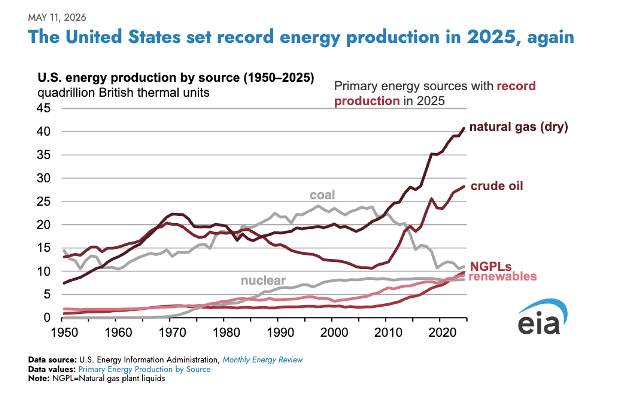
The U.S. was the world's largest petroleum importer until 2013 (when China took the title).
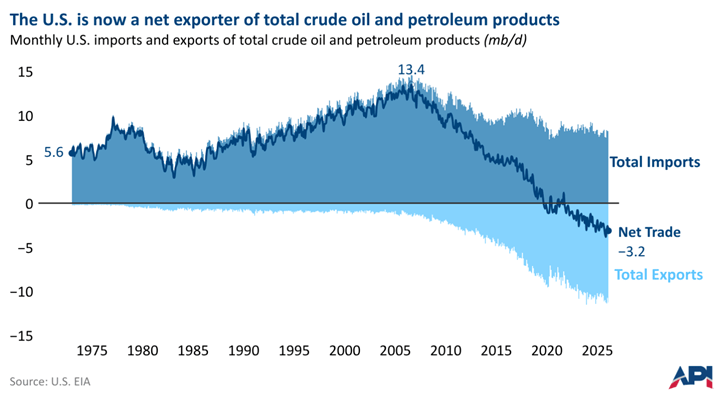
Today we’re the world’s largest petroleum producer. The shale revolution, powered by two key technological innovations — horizontal drilling and hydraulic fracturing (fracking) — made that possible.
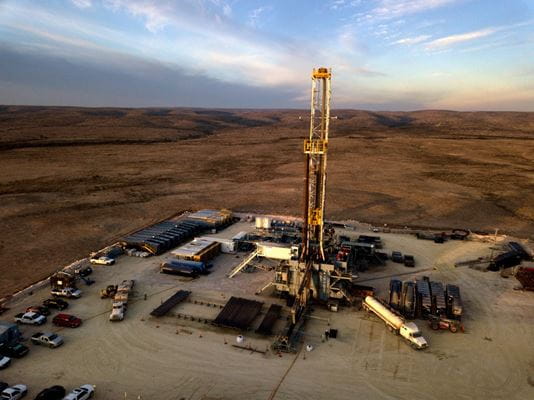
Those two technologies allowed U.S. producers to unlock oil and natural gas trapped in dense rock formations that had been previously uneconomical to tap.
U.S. crude production went from about 5 million barrels a day in 2008 to a record 13.6 million in 2025.
Around the same time those two technologies opened up shale oil, they also opened up shale gas. America became the world’s largest natural gas producer in 2011.
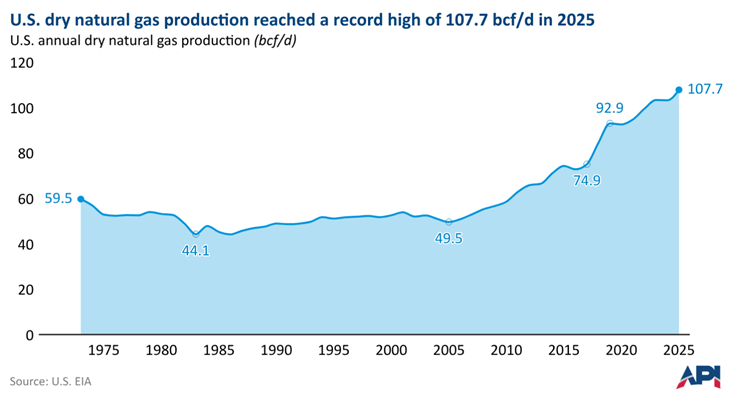
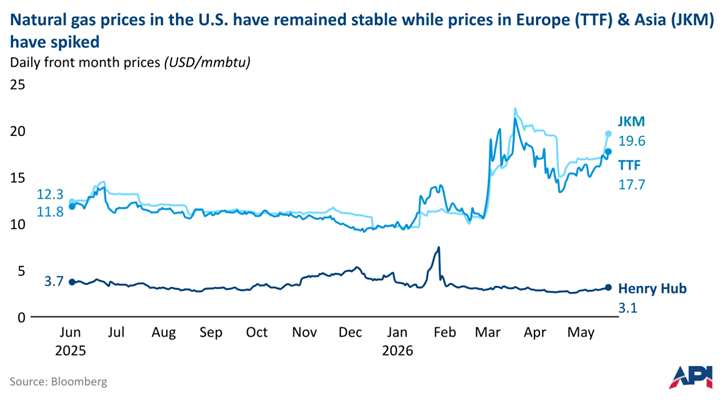
Abundant natural gas production has shielded American households and businesses from the significant price increases that have hit other major economies. Since closure of the Strait of Hormuz, Europe's benchmark gas price has risen 68% to $17.7 per million BTU. The U.S. price over the same stretch sat around $3.1 per million BTU.
What’s more, EIA data show that natural gas is responsible for about 60% of all power sector emissions reductions since 2005.
Twenty years ago, America was importing liquified natural gas (LNG). Companies were building more import terminals on the Gulf Coast to receive foreign cargoes under the expectation we would be importing even more in the future. Then the shale revolution arrived, and the import case collapsed.
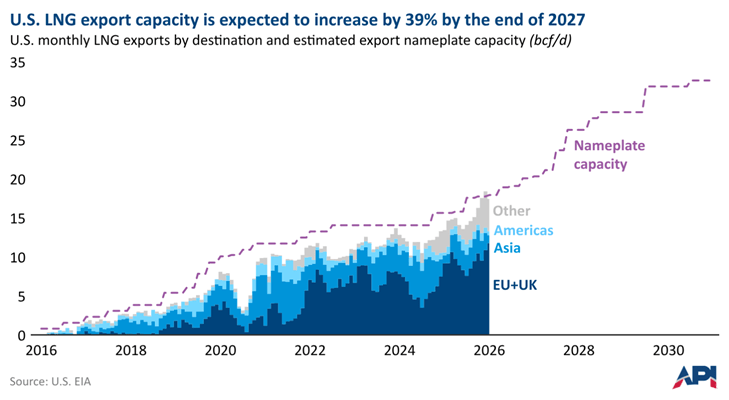
With so much natural gas available domestically, those import terminals were re-engineered to ship LNG out rather than take it in. Today, the United States is the world’s largest LNG exporter, providing about 27% of global LNG exports.
The Strait of Hormuz closure is causing serious energy and product shortages in many parts of the world — much as the 1973 embargo did to the United States. This time though, America is on the other side of the equation (we’re a net exporter instead of a net importer).
The lesson from this moment is not that the United States is immune from global disruption. It’s that decades of growth in American oil and natural gas production have fundamentally strengthened America’s energy position during periods of global instability.
Maintaining that advantage will require continued investment in the infrastructure needed to connect abundant supply to growing demand — both at home and abroad.