Global energy markets move at the speed of a headline. But actual barrels of oil do not.
While roughly 90% of the oil that normally moves through the Strait is bound for Asia and only about 8% of U.S. crude oil imports come directly from Persian Gulf countries, the United States is part of a global energy market. Disruptions abroad can still ripple through costs, trade flows and fuel supply chains here at home.
The Strait of Hormuz reopening is essential for balancing global energy markets. But when and if normal energy flows resume, oil and fuels delayed because of the disruption likely won’t instantly appear where consumers need it.
That's because physical energy supply chains move in weeks and months, not hours and days. This week's American Energy Snapshot looks at one important reason why: tankers.
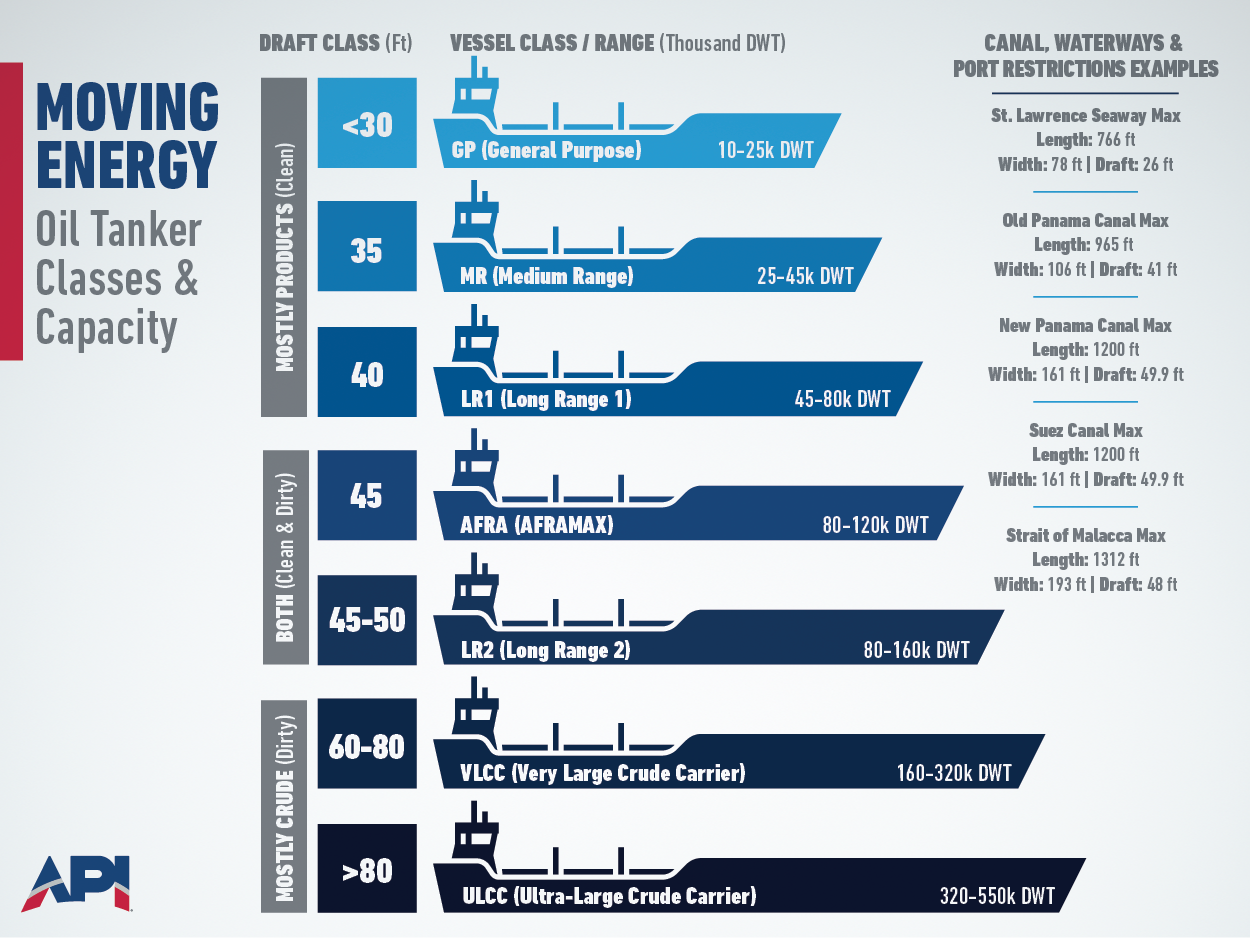
Much of the world’s seaborne crude oil moves on supertankers known as VLCCs (Very Large Crude Carriers). These tankers carry roughly 2 million barrels of oil, but they do not move quickly — a typical cruising speed is about 10 to 13 knots (11 to 15 mph). That’s about the pace of a brisk bike ride.
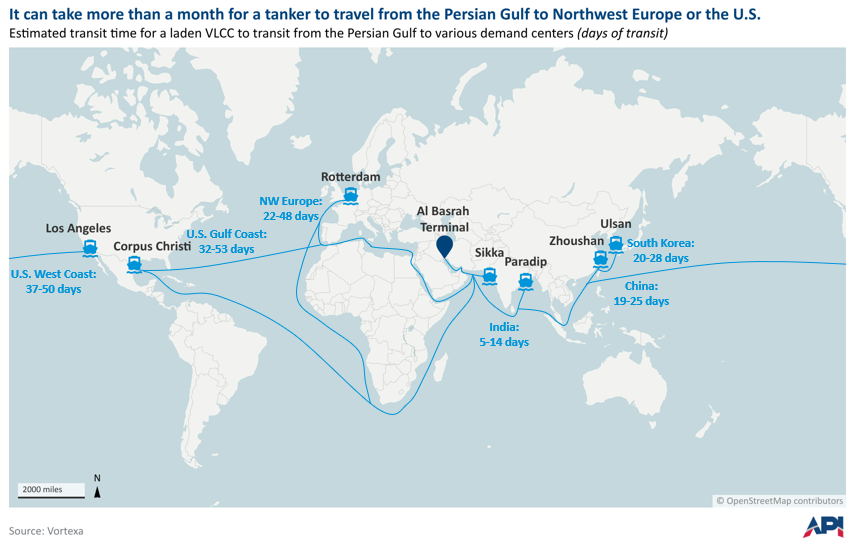
This means it takes significant time to get oil shipments from major supply points to their destinations.
A loaded tanker leaving the Persian Gulf can reach nearby India in less than a week, but reaching South Korea takes three to four weeks. Shipments bound for Europe or the United States can be at sea for well over a month.
Restoring normal flows is not as simple as full tankers sailing out of the Strait. Before the conflict, the Strait of Hormuz saw heavy two-way tanker traffic every day. Those flows have to be rebuilt in both directions.
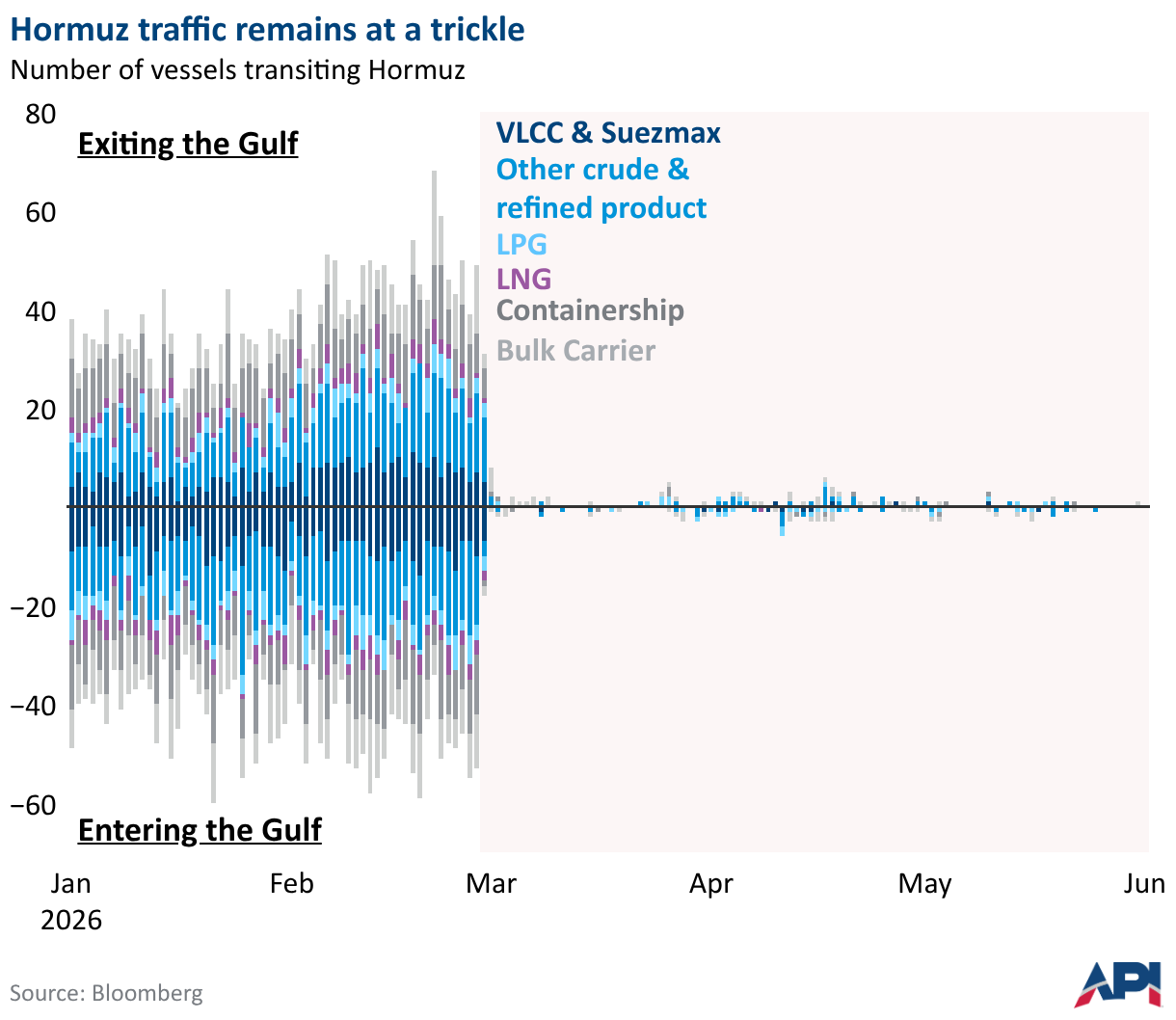
During a prolonged disruption, ships do not stay still and wait indefinitely. Some of the empty tankers have been redeployed to other routes to keep supplies moving elsewhere. That means tankers will need to be repositioned before normal patterns resume.
Every day a disruption continues, additional cargoes, vessels and deliveries fall behind schedule. Reopening the Strait is the first step toward normalization — not the last.
Often, the journey that takes a barrel of crude from the oil field to a consumer’s gas tank is anything but direct. In many cases, crude oil is first shipped to a refining hub, where it is processed into finished fuels before being shipped again to its final market.
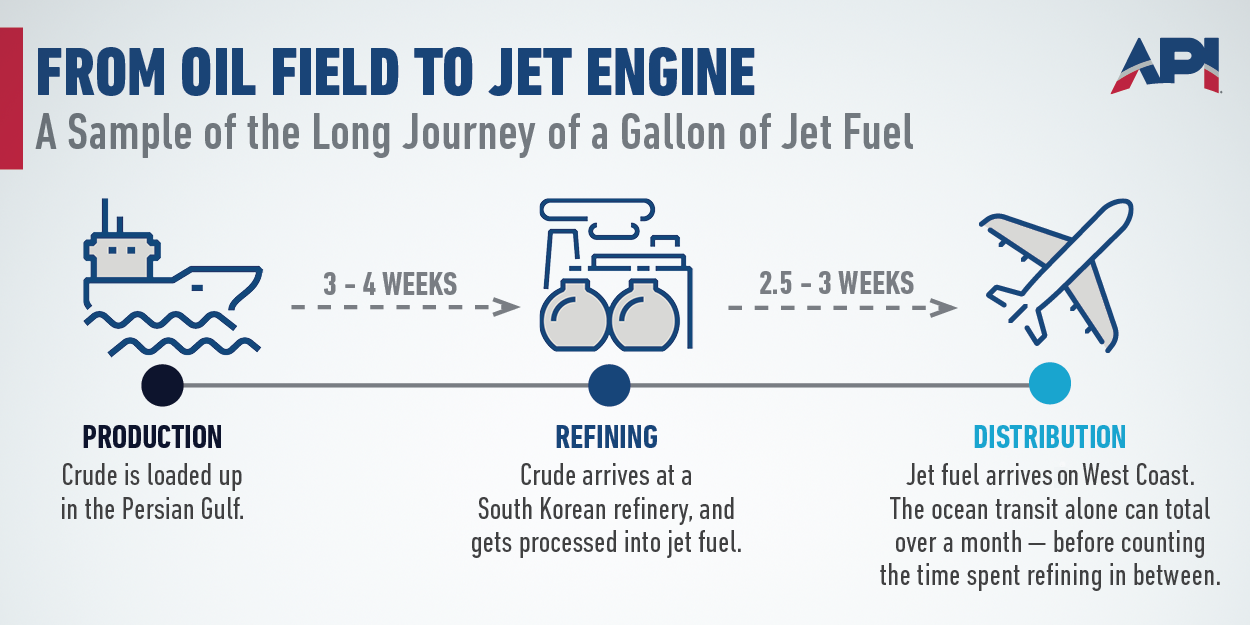
West Coast jet fuel provides a clear example.
Though only about 8% of U.S. crude oil is sourced from the Middle East, as we covered in a recent edition, California and other West Coast states import about 20% of their jet fuel. Most of it comes from South Korea — whose refineries depend on Middle Eastern crude oil. In practice, that means crude oil sails from the Persian Gulf to South Korea, is refined into jet fuel and then sails again across the Pacific to the West Coast.
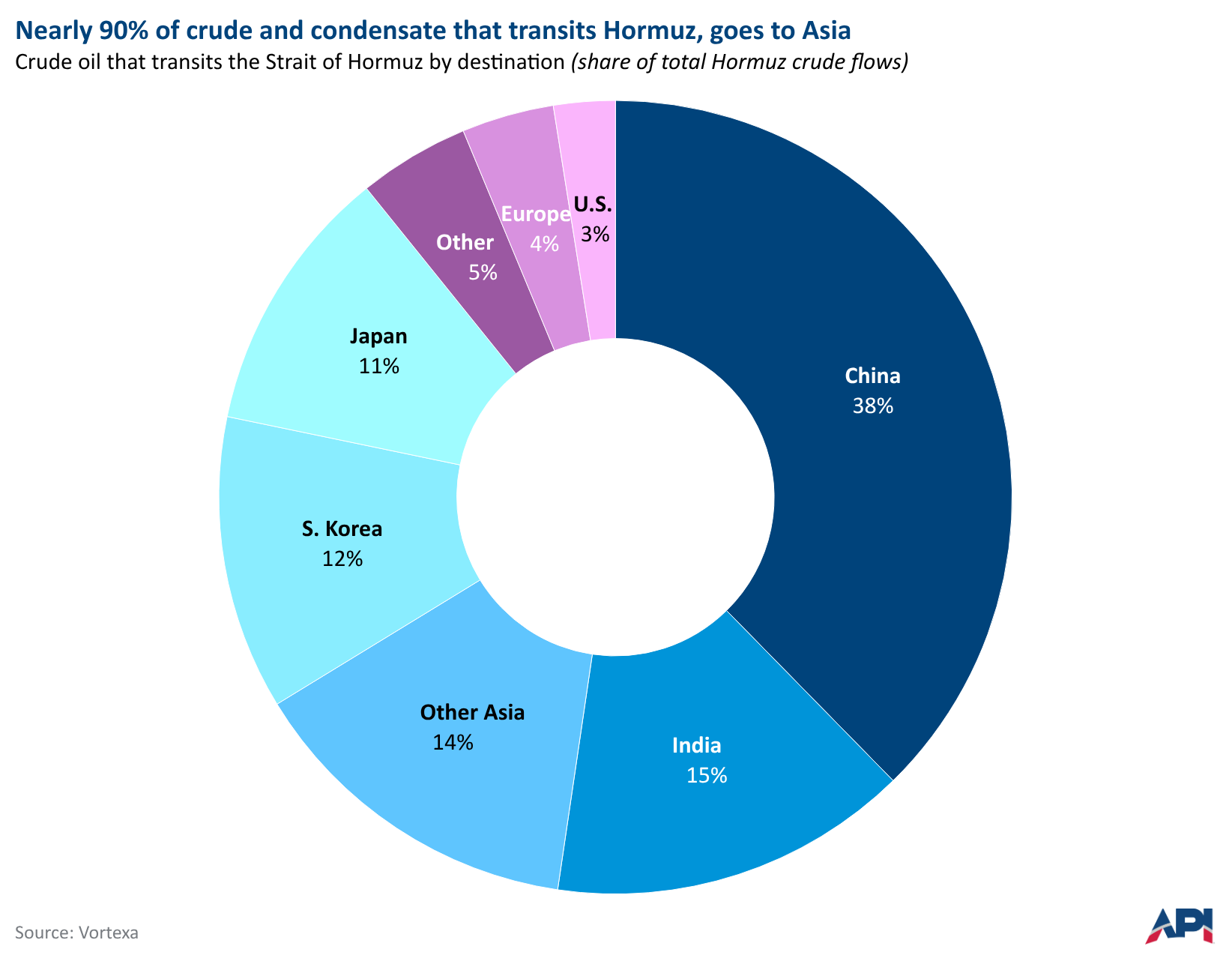
That “refining layover” adds time and demonstrates how disruption abroad ripples through supply chains nowhere near the original source. A disruption in one part of the world can still affect consumers thousands of miles away weeks later.
Expectations and headlines respond quickly, but actual physical barrels move at the speed of shipping. That means that if and when the Strait of Hormuz reopens, it may take time for markets and prices to adjust.
And although the United States is the world’s largest producer of oil and fuels, we are still part of a global market, and disruptions abroad can affect supply, prices and regional fuel flows here at home. Resilient supply chains, diverse supply routes, abundant domestic production and modern infrastructure all help cushion the impact of disruptions and keep energy flowing to consumers. Together, they make the energy system more secure when unexpected geopolitical events occur.