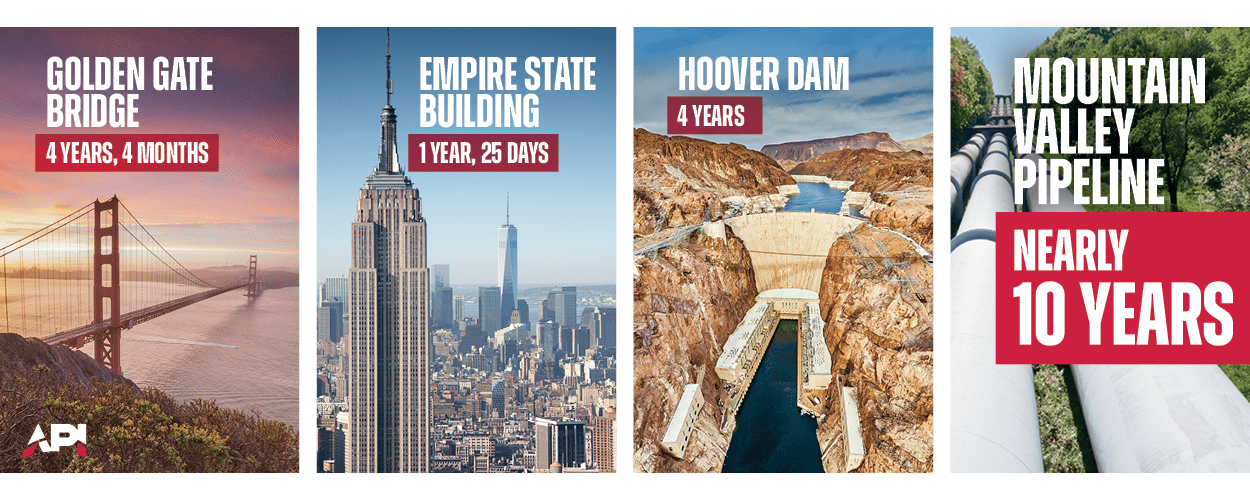
Almost 100 years ago, Americans built the Empire State Building, Hoover Dam and Golden Gate Bridge —
projects that still define our country's skyline. What might shock you is that while they were built with
the tools and technology of another era, they each took less time to complete than many critical energy
projects take today.
America doesn't lack the workers, resources, technology or capital to build big things. What it
increasingly lacks is a permitting system that can keep pace, and the result is higher costs,
delayed investments and projects stuck in uncertainty.
Three parts of the federal permitting process account for many of today's delays: environmental reviews,
state permitting and litigation. As Congress considers bipartisan reforms, this edition of
American Energy Snapshot explains how each works and why they matter to America's energy future.
Clean Water Act: How State Reviews Turn One-Year Deadlines Into Multi-Year Delays
-
What it is:
Many projects require state review under the Clean Water Act (CWA) to ensure they meet
water quality standards. The review is intended to focus on water quality impacts and
occur within a one-year deadline.
-
What's broken:
Some states have repeatedly asked developers to withdraw and resubmit applications,
often for reasons unrelated to water quality. This restarts the one-year clock and
can turn a one-year review into years of delay, as occurred with the Constitution Pipeline.
-
How reform helps:
Reinforcing the one-year deadline for state action and clarifying that reviews should
focus only on water quality impacts would create more certainty for developers and
communities that depend on reliable energy.
NEPA: Reviews Far Beyond the Project Itself
-
What it is:
The National Environmental Policy Act (NEPA) is a foundational environmental review law
intended to assess the environmental impact of major projects before they begin.
-
What's broken:
Since becoming law in 1970, NEPA reviews have gradually expanded beyond a project's
direct impacts, becoming longer, more expensive and increasingly vulnerable to litigation.
-
How reform helps:
Narrowing the scope of NEPA reviews would provide agencies with clearer direction,
reduce costs and help prevent major investments from being abandoned after years of progress.
Endless Lawsuits: Even Permitted Projects Can Face Years in Court and Higher Costs
-
What it is:
Judicial review gives people directly affected by a project an opportunity to challenge permits
if they believe agencies failed to follow the law.
-
What's broken:
Today, there are few limits on who can sue. As a result, groups with little connection to
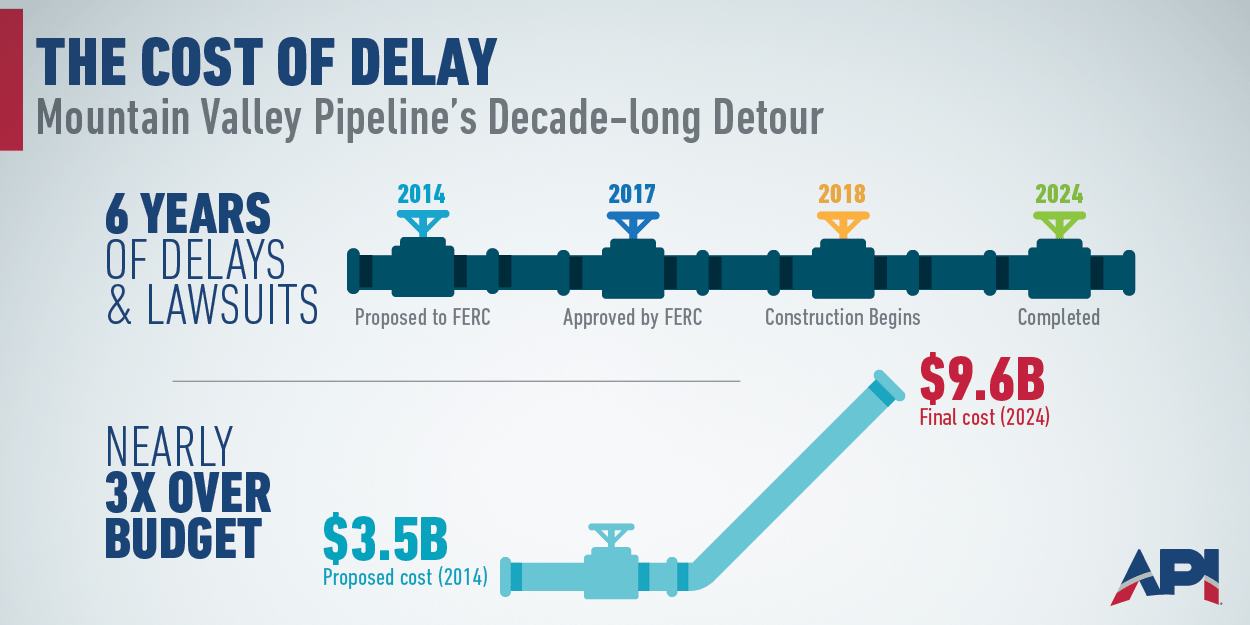
a project can tie permits up in court for years. The Mountain Valley Pipeline, for example,
remained in litigation for nearly six years after construction began, requiring an act of
Congress to move forward while costs nearly tripled.
-
How reform helps:
Creating reasonable timelines for legal challenges and ensuring challenges come only from
those directly affected would preserve legitimate rights while reducing litigation-driven
project delays.
The Takeaway
America has proven it can build extraordinary things. Today, the greatest obstacle often
isn't engineering, technology or investment — it's permitting.
Momentum for reform is growing in both parties. The House has advanced major permitting
legislation through the bipartisan SPEED Act, the PERMIT Act and legislation to streamline
pipeline reviews. In the Senate, Sen. Alan Armstrong has introduced a broader permitting
package that builds on many of these same reforms.
As Senate committees conclude negotiations, now is the time to get this done and send a
bipartisan bill to the president. If the nation is going to meet rising demand, strengthen
energy security and make energy more affordable, permitting reform is essential.
We publish a new edition of American Energy Snapshot every week through our LinkedIn newsletter. To see previous editions and to receive new ones, please subscribe.