
Middle East crude exports have at times approached pre-war levels in recent months as producers and shippers find ways to keep oil moving. But the recovery has been uneven, and global energy markets continue to face significant volatility with attacks on tankers increasing again in October.
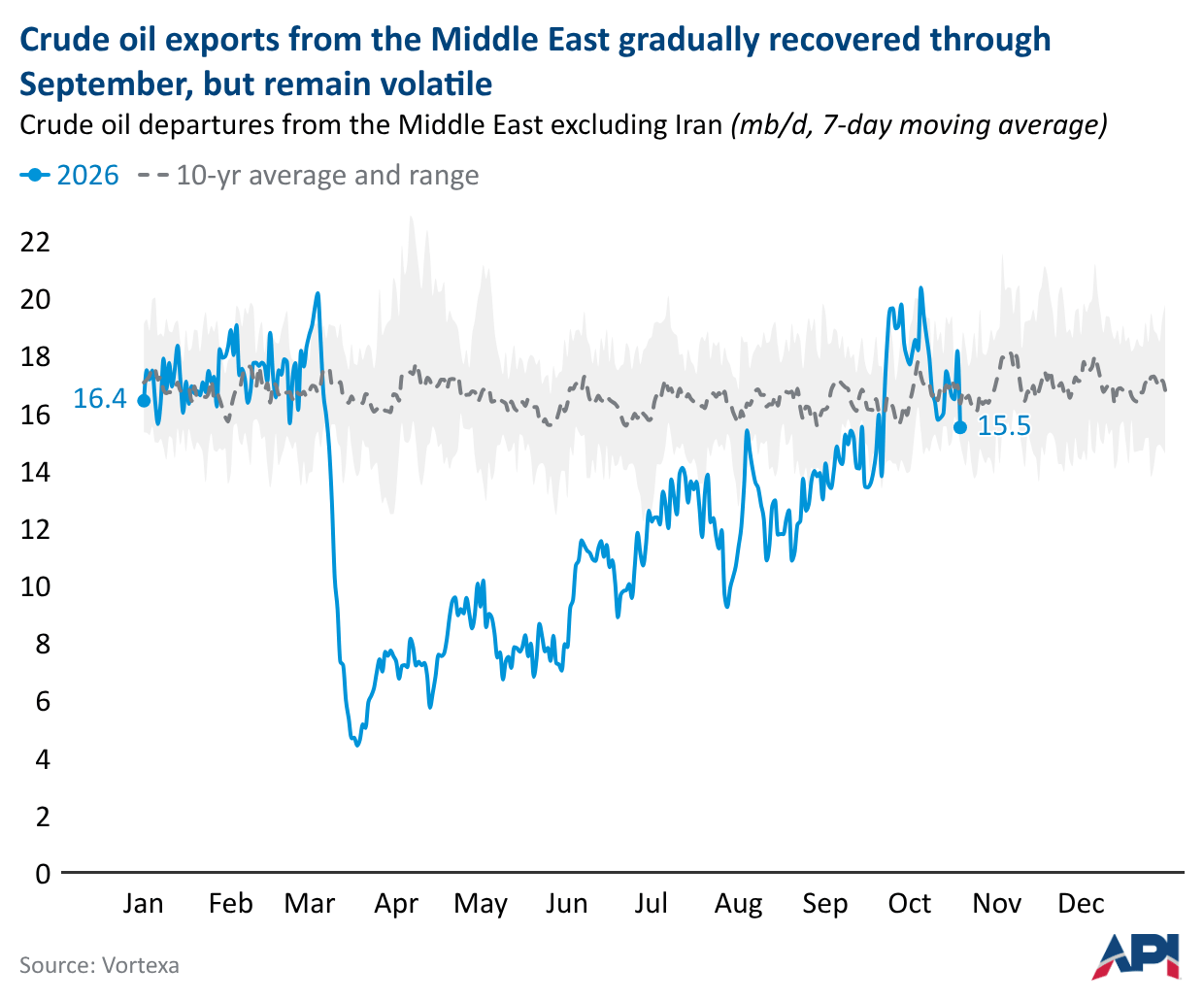
But fluctuations in Middle East oil flows are only part of the story behind elevated fuel prices. Shipping routes are longer and more expensive, refining disruptions have reduced global supplies of diesel and other fuels, and U.S. refineries are already operating at exceptionally high rates. Together, these pressures are keeping fuel markets tight and contributing to higher prices and refining margins.
Disruptions in the Middle East have forced major changes in how oil and fuel are transported around the world. Longer voyages, complicated transfers and heightened security risks are making it more expensive to keep supplies moving.
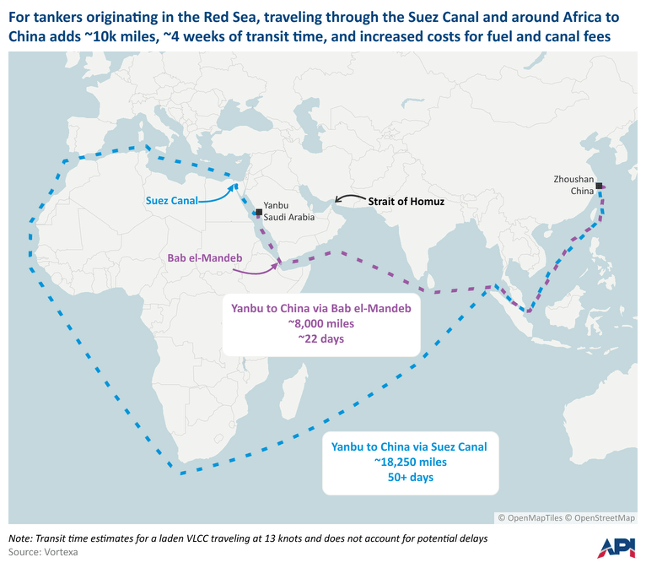
Some tankers bound for Asia are sailing all the way around Africa. Others take on crude offshore, from one tanker to another, rather than at a port terminal — a handoff that now takes close to 10 days, up from five to seven before the war.
Longer routes tie up more tankers for every barrel delivered. The benchmark rate for a supertanker sailing from the Gulf to Asia reached about $1.4 million a day in mid-October.
Insurance costs are also higher. Tankers entering the Gulf can face an extra war-risk premium, priced as a share of the ship's value. Before the war, that premium was about a quarter of 1%. Reported premiums for some voyages have reached 6% to 10% — as much as $20 million for a single supertanker voyage.
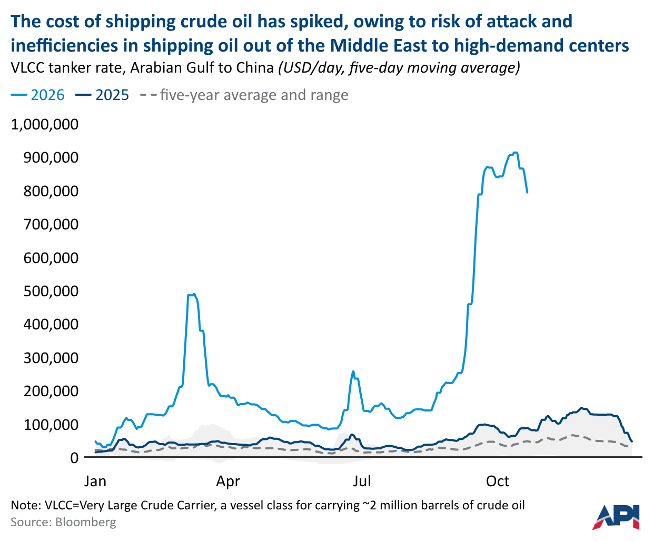
Together, longer routes and elevated security risks have pushed freight costs sharply higher. Those added transportation costs contribute to upward pressure on energy prices, even when and if more crude oil supplies are available.
Two of the world's largest fuel-exporting regions, the Persian Gulf and Russia, are shipping a fraction of what they did a year ago, and other suppliers have replaced only part of it.
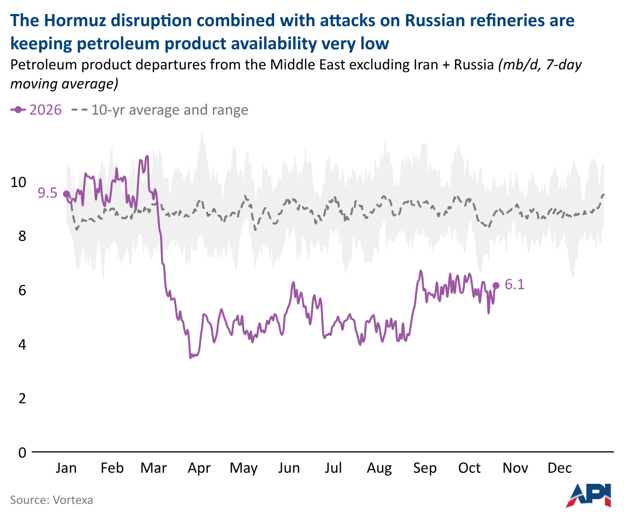
Persian Gulf refined-product exports have recovered to only about 20%–30% of pre-conflict levels. And Russia, once the world’s second-largest diesel exporter, has also seen diesel exports fall from roughly 1 million barrels per day to around 146,000.
Fuel is priced on a global market, so when supply is tight, prices rise everywhere, including here in the United States.
As buyers compete for fewer finished fuels, wholesale prices can rise faster than crude oil costs, increasing refining margins. Those margins reflect tight global supply conditions and create incentives for refiners to produce more fuel.
U.S. refiners are producing record amounts of fuel. But with utilization rates already near 100%, they have little room to further increase output.
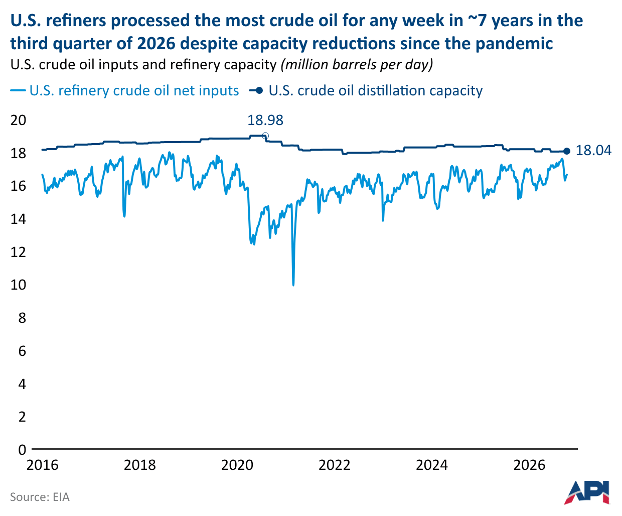
During the third quarter, U.S. refineries operated at approximately 95% utilization and processed more than 300,000 additional barrels of crude oil per day compared with a year earlier. Over the four weeks ending Oct. 9, they produced about 5.2 million barrels per day of diesel and other distillate fuels, a marked increase from the same weeks last year.
That additional production has helped cushion the loss of fuel supplies elsewhere. But even the world's largest refining system cannot fully replace the refining output lost across multiple major producing regions.
Fuel prices reflect a global market under pressure. Shipping oil and fuel takes longer and costs more, while disruptions in major refining regions have tightened supplies of gasoline, diesel and jet fuel.
Refiners are price takers, not price makers. They purchase crude oil and sell finished fuels in competitive markets shaped by global supply and demand. Easing pressure on consumers will require restoring global refining output, keeping trade flowing and preserving flexibility to move fuel where it is needed, including by extending existing Jones Act waivers and issuing new ones where appropriate.
We publish a new edition of American Energy Snapshot every week through our LinkedIn newsletter. To see previous editions and to receive new ones, please subscribe.

