

Charts & Analysis

Regularly updated with new charts and explanations that help make sense of a complex and ever-changing industry. Brought to you by the experts at API. Come back regularly for new content. For questions please contact: press@api.org.


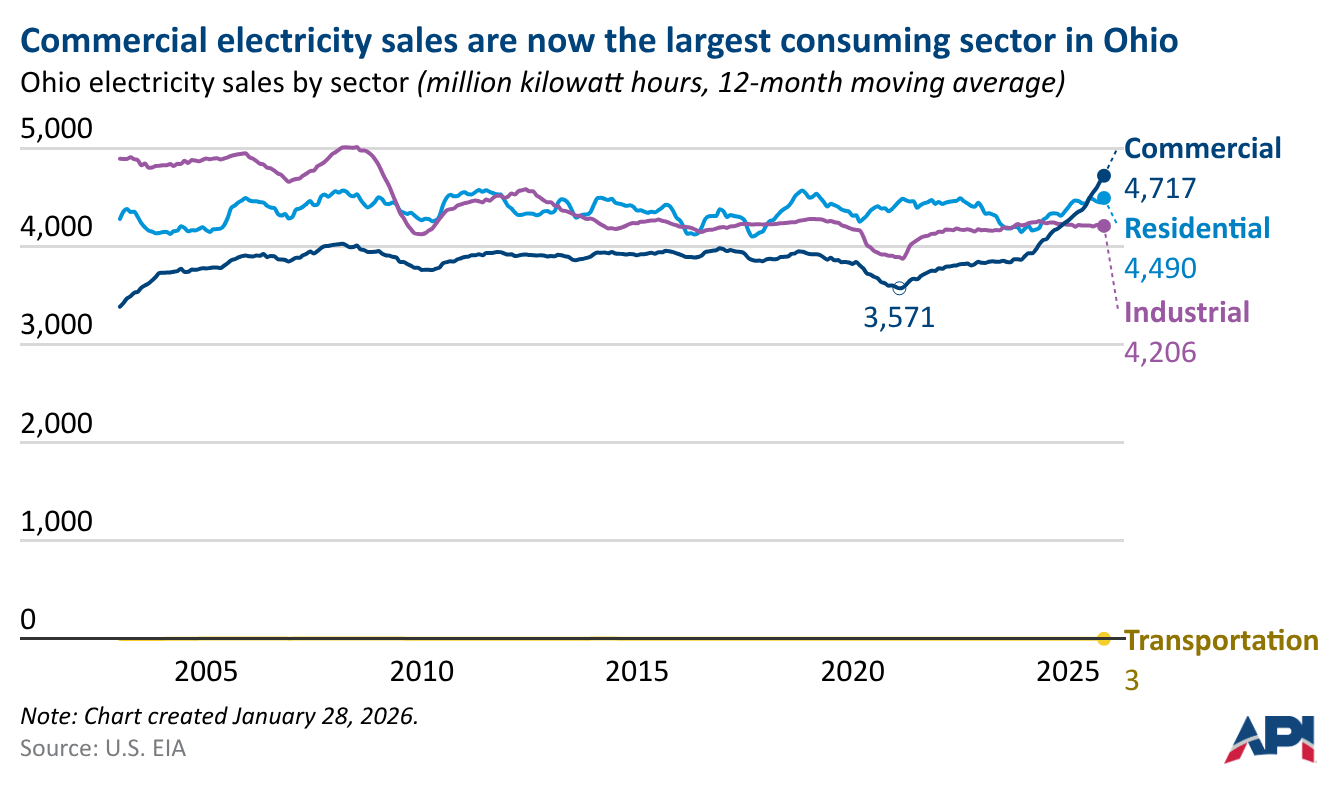
The commercial sector is now the largest electricity consumer in Ohio, driven by data center expansions

Ohio's commercial electricity sales surpassed residential sales for the first time on a twelve-month moving average basis in August 2025 and now account for 35% of all electricity sales in the state. This surge in electricity demand has contributed to tighter natural gas balances in the state. Natural gas consumption was 3.7 billion cubic feet per day (bcf/d) in October 2025, near an all-time high for the state and driven by growth in natural gas consumption for electric power.

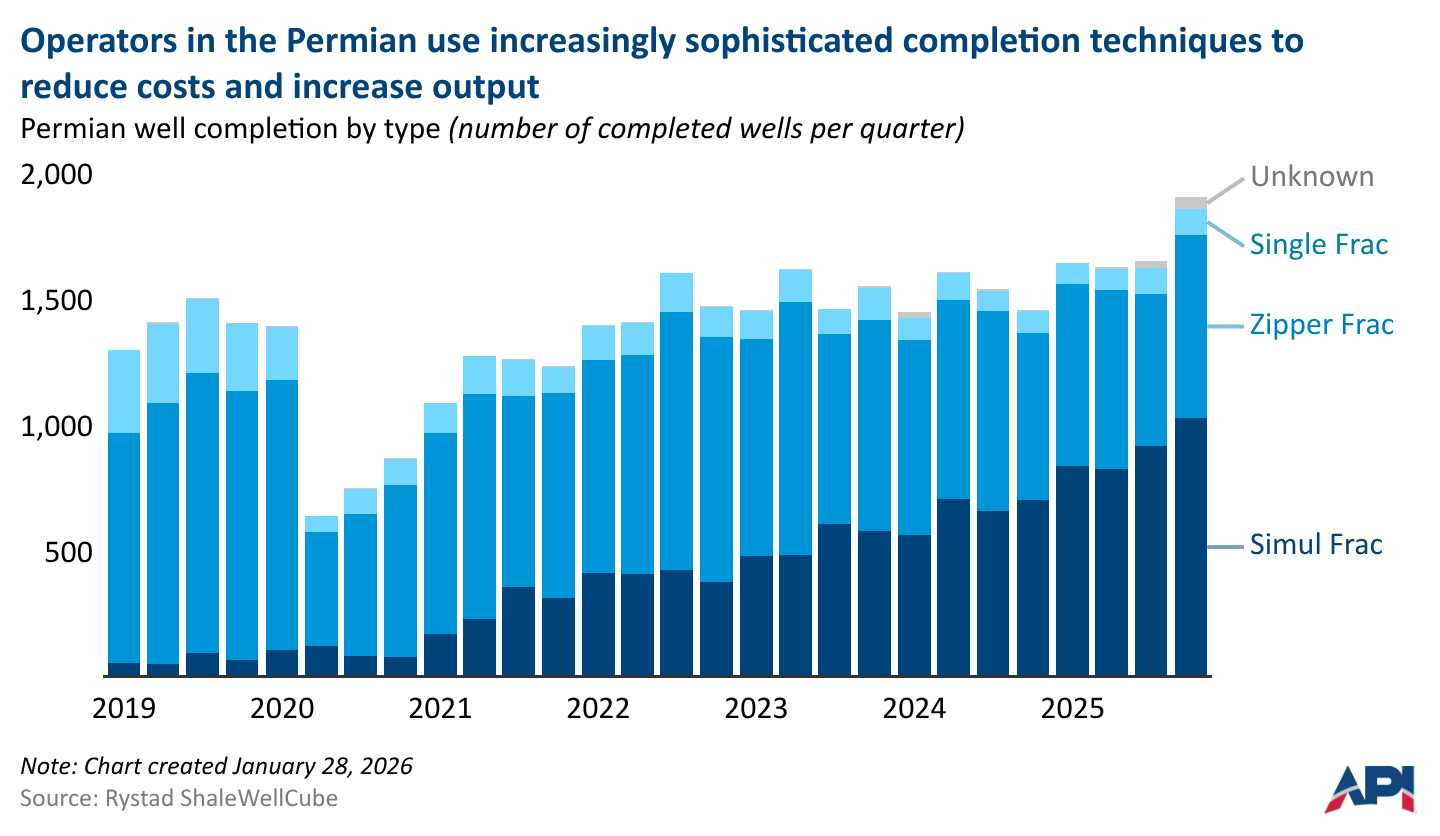
More than half of Permian wells were completed simultaneously last year

U.S. operators in the Permian region of Texas and New Mexico completed ~3,600 wells in 2025 using simultaneous hydraulic fracturing (simul frac), a technique that minimizes completion crew time on well pad sites by completing two wells simultaneously. 

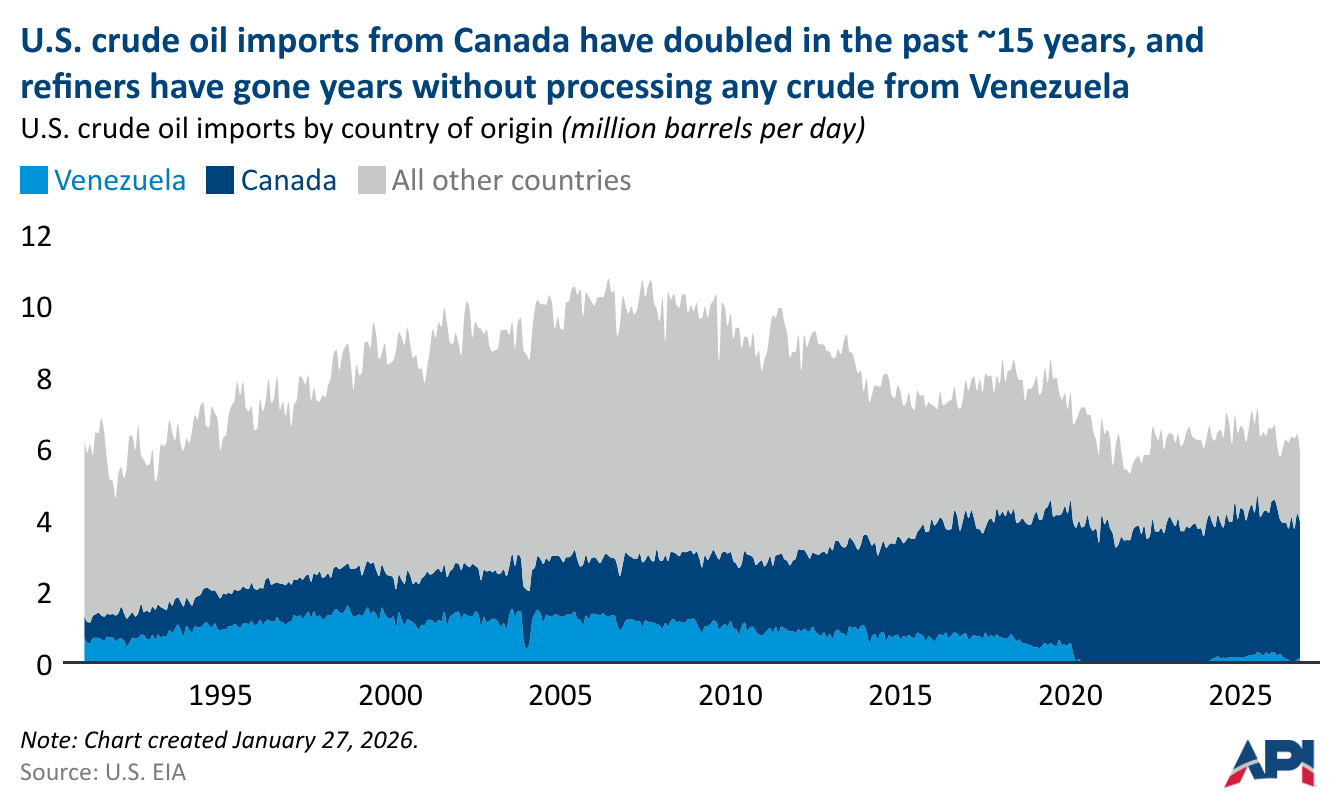
U.S. refiners have largely phased out the use of Venezuelan crude oil

Many U.S. refiners on the U.S. Gulf Coast (PADD 3) were designed to process medium and heavy grades of crude oil, such as those produced in Canada, Mexico, and Venezuela. Years of changes in both Venezuela and North America have led to a significant decline in the amount of Venezuelan crude oil that U.S. refiners process. 

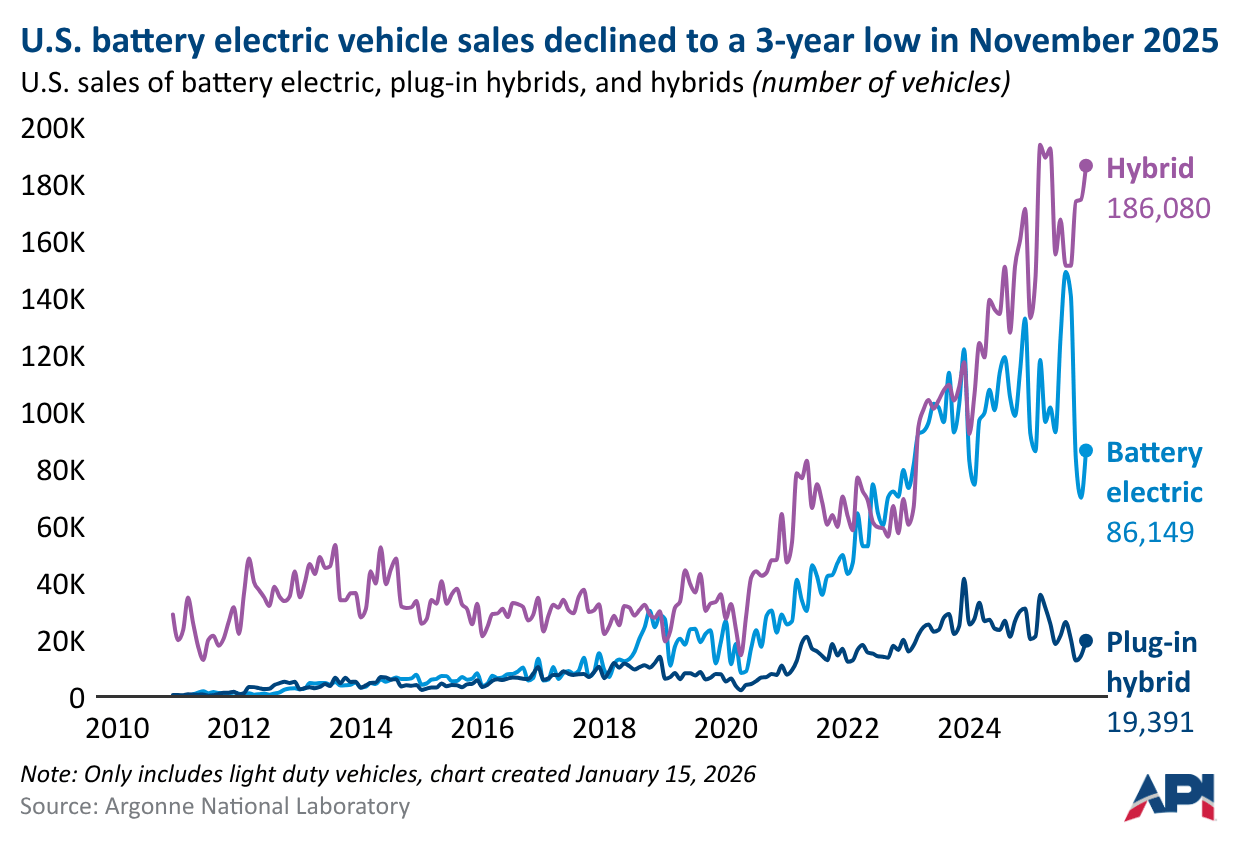
U.S. battery electric vehicle (BEV) sales fell to a 39-month low in November 2025

BEV sales surged in September, ahead of the expiration of the $7,500 federal tax credit, but then plummeted through the end of the year.

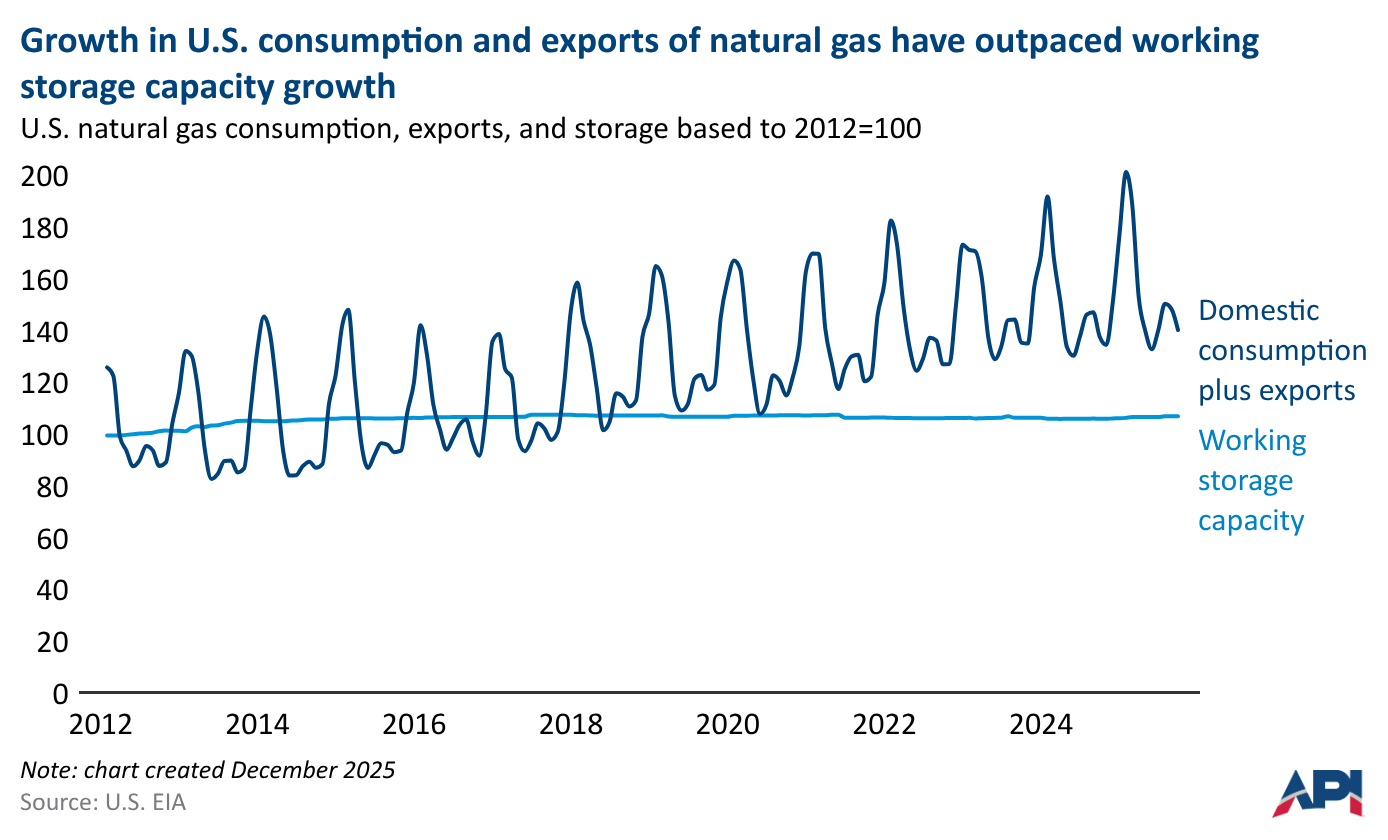
Total demand for U.S. natural gas has grown faster than working storage capacity

Total demand for U.S. natural gas, including domestic consumption and exports, has grown faster than working storage capacity over the past several years. When indexed to 2012, working storage capacity has increased ~7% through late 2025. Demand for U.S. natural gas fluctuates seasonally, but averages more than 50% higher today than in 2012. 

Refinery closures are leading to higher gasoline imports in the U.S. West Coast

Gasoline imports in the United States are typically highest during the summer driving season. In fall 2025, however, PADD 5 gasoline imports surpassed even the summertime levels of previous years and reached an all-time high.

Increased flying leads to more jet fuel consumption in China

Passenger-kilometers flown in China, which accounts for both the number of passengers and distance flown, continues to reach new highs after pandemic restrictions were lifted in late-2022. 

Falling domestic crude oil production in the U.S. West Coast has contributed to increased crude oil imports and a higher refinery acquisition cost of crude oil

Refineries on the U.S. West Coast (PADD 5) have increased their imports of crude oil as local production in Alaska and California has declined.

Petroleum product consumption is at or near all-time highs in Rocky Mountain states

The Rocky Mountain region (PADD 4) is the least populous in the United States, but a combination of growing population and increased crude oil production is contributing to higher consumption of gasoline, jet fuel, and distillate fuel oil.

Non-OECD countries now account for nearly 60% of global petroleum consumption, up from 35% in the 1990s

Nearly 60% of the world's liquid petroleum consumption now occurs in non-OECD countries, up from just 35% in the 1990s.